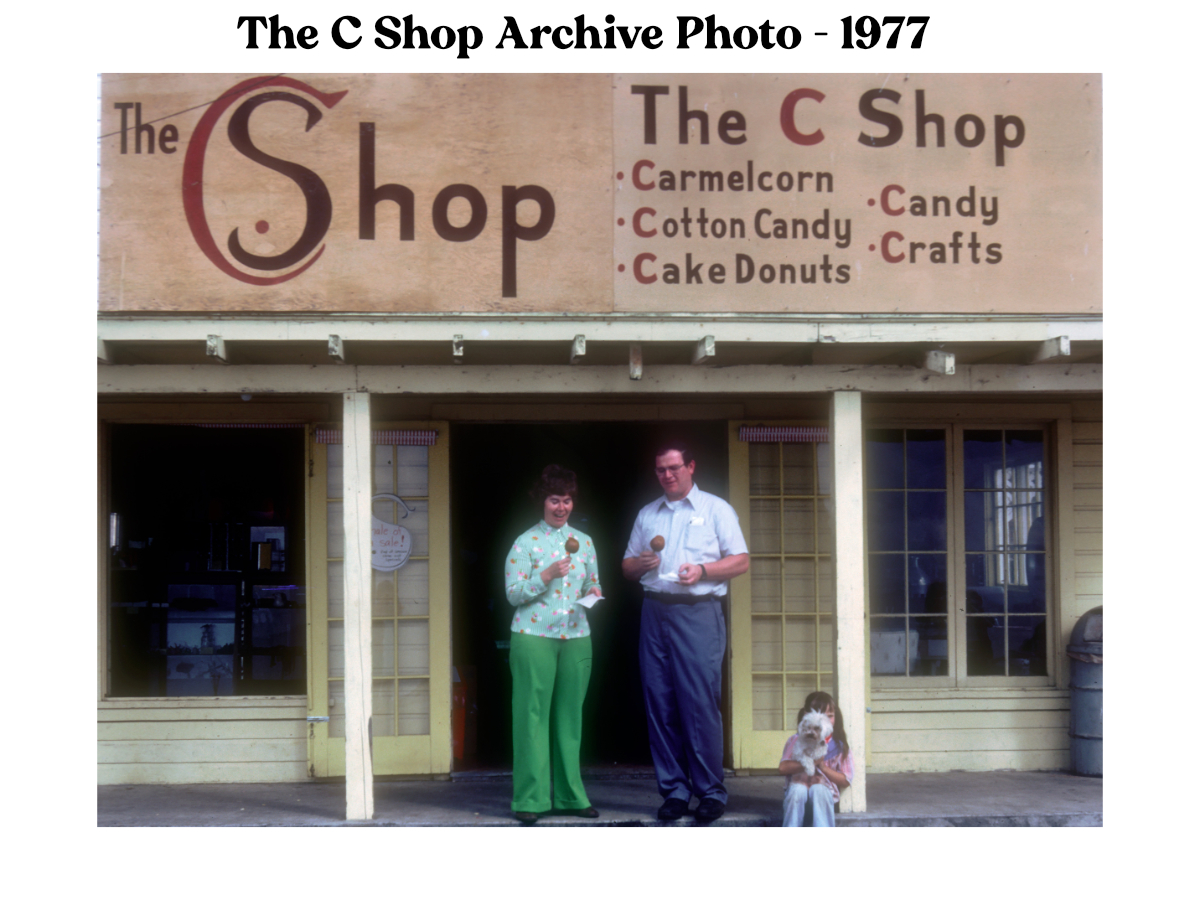
When Patrice and I started The C Shop Birch Bay in 1971, only septic systems were available. Because the septic systems at Birch Bay had passed their limit, Birch Bay was polluted, and no more building was allowed, and growth at Birch Bay was at a standstill. 1976 was the year that all changed. The sewer plant started operating, and the building at Birch Bay surged. At the same time, many old buildings began hooking up to the sewer. Growth started at Birch Bay. New buildings were now being built. Birch Bay Village and Leisure Park were new additions.
As Birch Bay grew, it became more evident that developers were interested in building there. One even had acquired the right to part of the tidelands near Shore Acres and was keeping people off the area. He had the vision of filling the area in and building on it.
As Birch Bay grew, Patricia and I had to move The C Shop to a new location because Shore Acres Resort was being torn down and replaced with the new buildings of Jacobs Landing. We eventually rented and bought the present building, The C Shop.
Sixteen years after the start of the sewer district, people at Birch Bay brought the question of control of growth to our area. Birch Bay voters had a chance to make Birch Bay a city. The significant advantage of Birch Bay becoming a city would be local control of the growth coming to Birch Bay. The disadvantage is that “city,” like “taxes,” is a buzzword. To people, a city means higher density, more people, and more taxes. My thought at the time and still is, “The only density I worry about is between people’s ears.”
Would taxes go higher in a city? In a city, you get more efficiency out of your tax money. If you get more efficiency, people may decide to increase their taxes. Let’s take a look at our county in Bellingham. The per-person property taxes are $1,698. That is $294 lower than in the county, which is $1,992. Bellingham has better policing, fire protection, and EMS services. These higher levels of services lead to lower insurance rates on homes and automobiles. Even electricity and internet costs are lower in Bellingham than in the county’s rural areas.
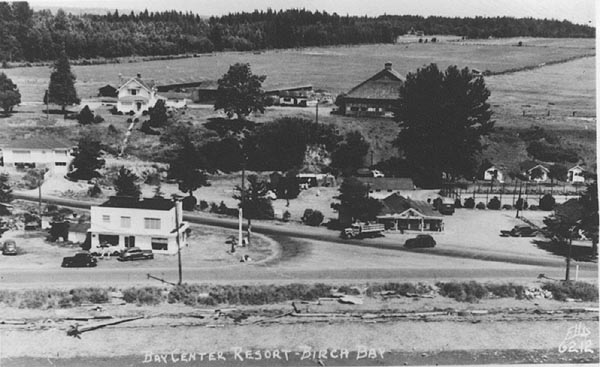
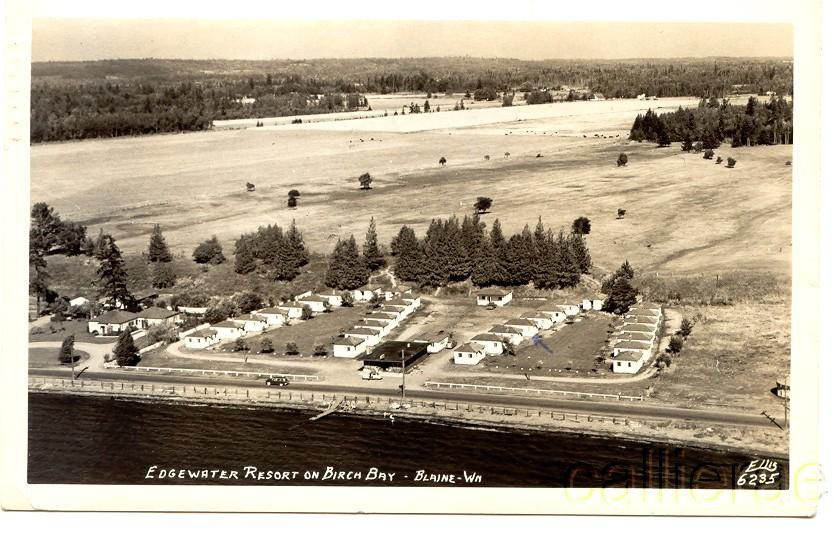
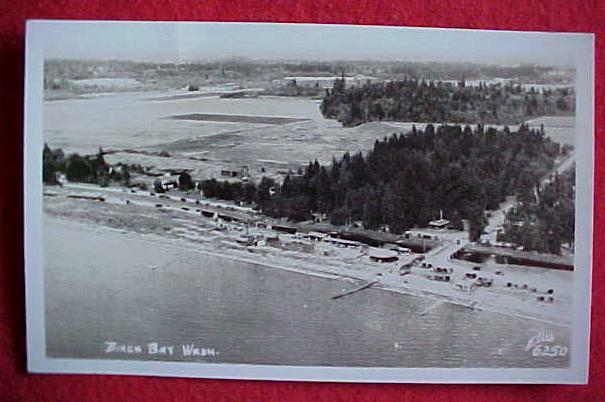
What Birch Bay Looked Like Before Sewers


What Birch Bay Looks Like After Sewers


Water/Sewer Districts are Municaplities
Yes, water/sewer districts are municipalities—local government—and Birch Bay has one that works very well. Its approach is growth pays for growth, which means that developers need to pay the full cost of development. You can see by comparing the two sets of photos above how Birch Bay has grown
Incorporation Effort in 1992
The 1992 incorporation effort was initiated by a group living near Drayton Harbor. They feared being included in the city of Blaine. Blaine was planning to annex Semiahmoo, and to do that, they had to be contiguous to Semiahmoo. The group worked very hard at circulating a petition. When they had enough signatures to bring Birch Bay’s incorporation to a vote, Patrick Alesse signed the petition. The Alesses had been living at Birch Bay during the summers and had moved their voting to Birch Bay two or three years earlier, mainly so they could vote on Birch Bay Water Sewer issues.
During this time, the Growth Management Act was coming into effect. It would limit growth in rural areas, but small counties would be exempt. There was a movement called Pioneer County. They wanted to separate from Whatcom County and avoid its strict land-use regulations. They wanted Birch Bay to be part of Pioneer County but preferred it as something other than a city.
Fire 13 had just left the city of Blaine because Blaine was slow to support the fire district. The last thing the fire district wanted to do was deal with another city. Its members fought incorporation. People who worked for Birch Bay Water Sewer District also fought for incorporation. However, the water sewer board remained neutral. The employees were concerned that the city would take over the district. At that time, it was common for cities to do so because they would then gain control of the district’s enterprise funds. There was another group called the Rural Preservation Forum. The irony of that group was that Atlantic Richfield (now BP) is an urban area, but it backed them, perhaps they do not want a politically strong city as a neighbor.
The incorporation group reported on incorporation at Birch Bay Village’s annual meeting, which was held in the old Grange Building. The incorporation group’s report received thunderous applause. When asked for questions, the audience had none. No questions? Why not? This was mysterious.
When the Alesses moved to Birch Bay at the beginning of the summer of 1992, Patrick was surprised to see a familiar truck belonging to one of Birch Bay’s opponents following them from their house to Birch Bay. Soon after, the Alesses received a letter from the Whatcom County Auditor stating that our voting rights were being challenged and that we needed to come to the courthouse to defend our voting at Birch Bay. The Alesses appeared at the courthouse, stunned but ready to defend themselves. The individual who followed the Alesses to the bay was there and testified. He saw us driving to Birch Bay from our house outside Blaine. The county auditor ruled in favor of the Alesses voting in Birch Bay. After the hearing, the county auditor pointed out that the individual who testified to challenge our voting rights helped to establish our right to vote at Birch Bay. Many opponents of incorporation still use this to portray Patrick as an outsider seeking to become mayor.
Even though Birch Bay paid into the county for roads and the funds were available, the county decided to repave the road to Birch Bay Village because of the upcoming vote on incorporation. People in Birch Bay Village became furious and blamed the incorporation effort for the road improvement going to the village had stopped.
One argument against incorporation was that developers were behind it.
The area of incorporation was brought to the Boundary Review Board, which was a good thing. The Boundary Review Board established two important boundaries: the southern boundary, which limited it to the Birch Bay Sewer District area, and the northern boundary, Lincoln Road, which extended and defined the area between the future City of Birch Bay and Blaine.
 Enjoy Birch Bay